Where Regeneration Begins: The Power Of Small Hospitality Businesses
Local businesses are foundational to rethinking the future of travel and tourism. Deeply nested in both place and society, they do more than sustain the economy.
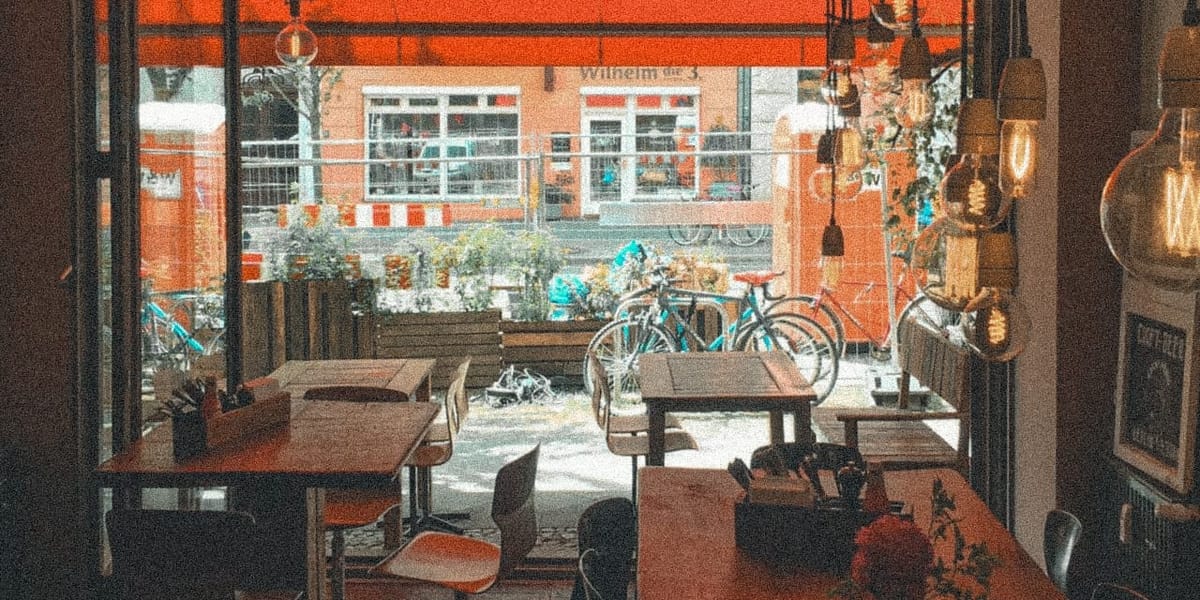
One sanded the wood, and someone else followed behind, brushing it with oil. The freshly cut shelves stood drying in the Berlin summer sun, waiting to become the new bar shelf.
For two months, instead of serving guests and clearing tables, we painted bathroom walls in charcoal grey, dining room walls in terracotta or beige, and sealed the floors in a dark, earthy brown.
Working side by side with the builders, reshaping the interior from the ground up, I began to understand how our relationship to a space deepens when we work on it with our hands. You feel the texture of the materials, smell the scent of change, and begin to see the development of potential.
The long wooden tables, the cozy sofas, the bar shelf we built, they became a second living room for many of us, the team and guests alike. A space where I felt, for the first time, a real sense of belonging.
When I look at photos from that time now, I see more than a restaurant.
I see a chapter of my life where work and community are tangled together in the most beautiful way.
Hospitality Is About Belonging
Our team, a mix of artists, writers, cooks, musicians, and students, wasn’t “like a family” in the corporate sense. We were friends, in the real, sometimes messy way that only such intense shared work and late nights can create.
We hosted dinners, both at the restaurant and in our houses. We laughed. We cried. We danced. After shifts, we would stay up late, changing the world over whiskey sours, talking life, politics, love, and the futures we hadn’t yet figured out.
They are some of the memories I hold closest to my heart.
My partner and I managed the restaurant until the owners sold it during the pandemic. It was never our own, but it felt like home. And when I said goodbye to the coffee machine, it took me a while to realize that I was grieving.
We’ve all moved on now. Some friendships faded, but many stayed. The kind that hold through time and distance. Even now, when we visit our former bosses, we say:
“It’s because of you that we found love, that we built friendships that still last today.”
It was during these years that I fell in love with the art of hospitality.
At its heart, hosting is nourishing. It invites relationships and challenges us to keep adapting with curiosity and care.
When you work with so many different people, you are studying human cultures and psychologies. But your observations go beyond, and you learn to interact: to listen, understand, and respond rather than react, engaging with each other in presence. You grow by meeting others exactly where they are.
To me hospitality is a way of living.
Accompanied by this vision, my partner and I set off in 2022 on what we called Trip22 — a slow journey across seven countries, in search of inspiration to help bring our own locality into being.
Learning On The Road
We stayed in various accommodations, different in form, shape, and size, but all run by families or small venture owners.
In northern Peru, we worked alongside an Argentinian team in a family-operated beachside hotel, cleaning rooms, helping in the kitchen, and serving guests.
We were making beds for guests when a casual conversation with the Swiss hotel owner, married to a Peruvian, changed the course of our lives.
This moment is the reason we now live in Switzerland.
And with time, I came to see the life lesson it carried: to stay open to the unexpected ways life flows, aware of how small acts sow the seeds for our tomorrow.
In Iquitos, we stayed in a hostel full of plants, blooming from the owner’s passion for connection. "I started with one room, and I continued renovating one room at time." he said about building his project with patience and endurance.
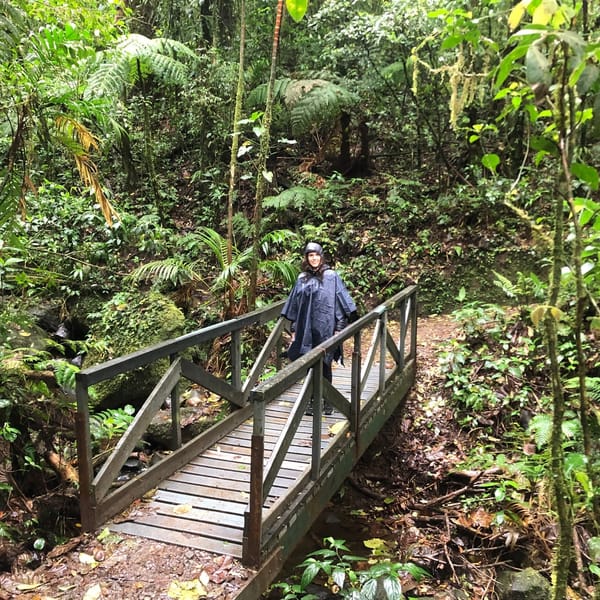
We spent a week in the Amazon with a curandera (female shaman), living in a modest hut of wood and sheet metal, surrounded by the living jungle and the unseen presence of spirits. Her welcome was both humble and generous like herself as she invited us into her world of ancestral wisdom and natural communion.
Even today, I hold her words close to my heart.
In Menorca, a Spanish-German family received us into their home, where they were building a concept of slow living, co-working, and gathering. In exchange for helping care for the chickens and garden, we joined their rhythm of shared meals, creative projects, and guided dance sessions under the open sky.
Small hospitality businesses reflect the values and rhythms of the environments they belong to, not just the demands of tourism trends.
Beyond guesthouses, it’s in the diversity of eateries, cafés, huariques, sodas, tavernas, and bars that the daily culture of an area lives.
These establishments, too, are influenced by the larger systems they exist within, from ecological landscapes and native flora and fauna, to seasonal rhythms, social dynamics, and historical context.
As much as they express the essence of a place, they also co-evolve with it, shaping not just a travel destination, but a home.
Travel only begins to reach its full potential for meaning through these personal, nested businesses, because of the people and fabrications behind them.
The Role Of Small Businesses
More than 80% of global travel businesses are small or medium-sized enterprises.
That number matters: Economically, culturally and socially.
Unlike large corporations, independent local hospitality companies are anchored in their surroundings. They are operated by people who live there. Their children go to local schools.
They know the stories of the street corner, greet their neighbors by name, and remember who always just orders a coffee or the sandwich without cheese.
This closeness makes them responsive to what the neighborhood needs.
They know when there’s a housing shortage, when local fishermen struggle, and they’re among the first to feel the effects when tourism drives up the cost of living.
Because there are so many small hospitality businesses — and because they’re such an integral part of the cultural and social fabric — their power to move toward revival is profound.
This is something long recognized by movements like Local Futures, which advocate for the importance of local economies and highlight place-based businesses as key to a thriving, ecological, resilient future.
Each local guesthouse, neighborhood café, or respectful tour operator can choose to make everyday decisions that sustain the well-being of their society and environment. And when many of them move in that direction, the wave of change becomes life-giving in itself.
Policy Matters
Too often, sustainability initiatives are designed with large corporations in mind that can afford solar panels, high-level certifications, and energy-efficient systems.
If we want to travel to restore rather than exploit, we need to rethink what business success looks like. We require policies that not only help locally owned businesses but also include them in decision-making, because the place itself knows what it needs.
Governments must stop prioritizing short-term profits at the expense of the well-being of local residents and workers. Instead, they should actively promote sustainability for local tourism entrepreneurs by providing financial support for eco-friendly advancements and self-organized initiatives.
It is also vital to reduce bureaucratic barriers that hinder innovation and to develop policies that protect independent businesses from being priced out or bought out.
Investing in training, mentorship, and grant programs can help small-scale hospitality projects develop with integrity and stability.
These decisions are not just economic; they are necessary responses to today’s social and ecological challenges and steps toward restoring a healthier relationship between tourism, nature, and local life.
Beyond Profit
Independent businesses must be financially sustainable because their founders rely on them for their livelihood. However, it’s important to consider whether we are creating something solely for our benefit or if we are also contributing positively to our community.
At one point, I dreamed of opening a guesthouse in Menorca. I fell in love with the light, the land, and the energy of the island. But after speaking with Menorcans, I realized that Menorca doesn’t need another outsider-run hotel. What it needs is housing for the seasonal workers who are increasingly being pushed out of their own hometowns.
I’m not against starting fresh in a new country. But I believe that with that privilege comes responsibility. Even the most beautiful dream must be held up against reality.
Initiators Of Regeneration
Hospitality is a way of serving and participating in society, of creating spaces for connection, inspiration, and shared experience.
Business is the structure that carries it. It not only drives economies but also provides a means for individuals and collectives to reclaim their agency, build resilience, and take responsibility.
When founded on principles of reciprocity, hospitality entrepreneurship can do more than just support a family, it can help revitalize entire local economies.
This is still a new perspective for me: instead of viewing enterprises only as profit-driven machines, I am starting to recognize their power as positive changemakers.
I’m learning that entrepreneurship is a useful tool, and can be grounded in collaboration rather than competition, in relationship rather than extraction.
Business has the potential to evolve in harmony with the living systems it inhabits, rather than operating in isolation from them.
Regenerative systems thinking is gaining momentum. Around the world, collectives, initiatives, and grassroots movements are reclaiming agency, resilience, and care for the places they live in.
These aren’t just trends; they reflect a desired shift in how we understand business, social norms, and our role within living systems.
However, this shift in thinking also asks us to keep questioning. To move slowly. To remain open and reflective.
Regeneration isn’t a goal to reach, but a lifelong practice. A way of co-evolving with the ecosystems we are part of, rather than trying to control them.
If practiced with depth, regeneration becomes a way of being, one that can help dismantle systems of domination, not reinforce them.
But this doesn’t happen by accident. It requires responsibility, constant reflection, and the humility to acknowledge that regenerative knowledge is not new. It is ancient.
As many Indigenous thinkers remind us, regeneration is not something we create; it is something we remember, relearn, and are invited to embrace.
And perhaps small hospitality businesses, with their rootedness in people and place, are some of the most hopeful stewards of that remembering.