How do I know when I am listening to land?
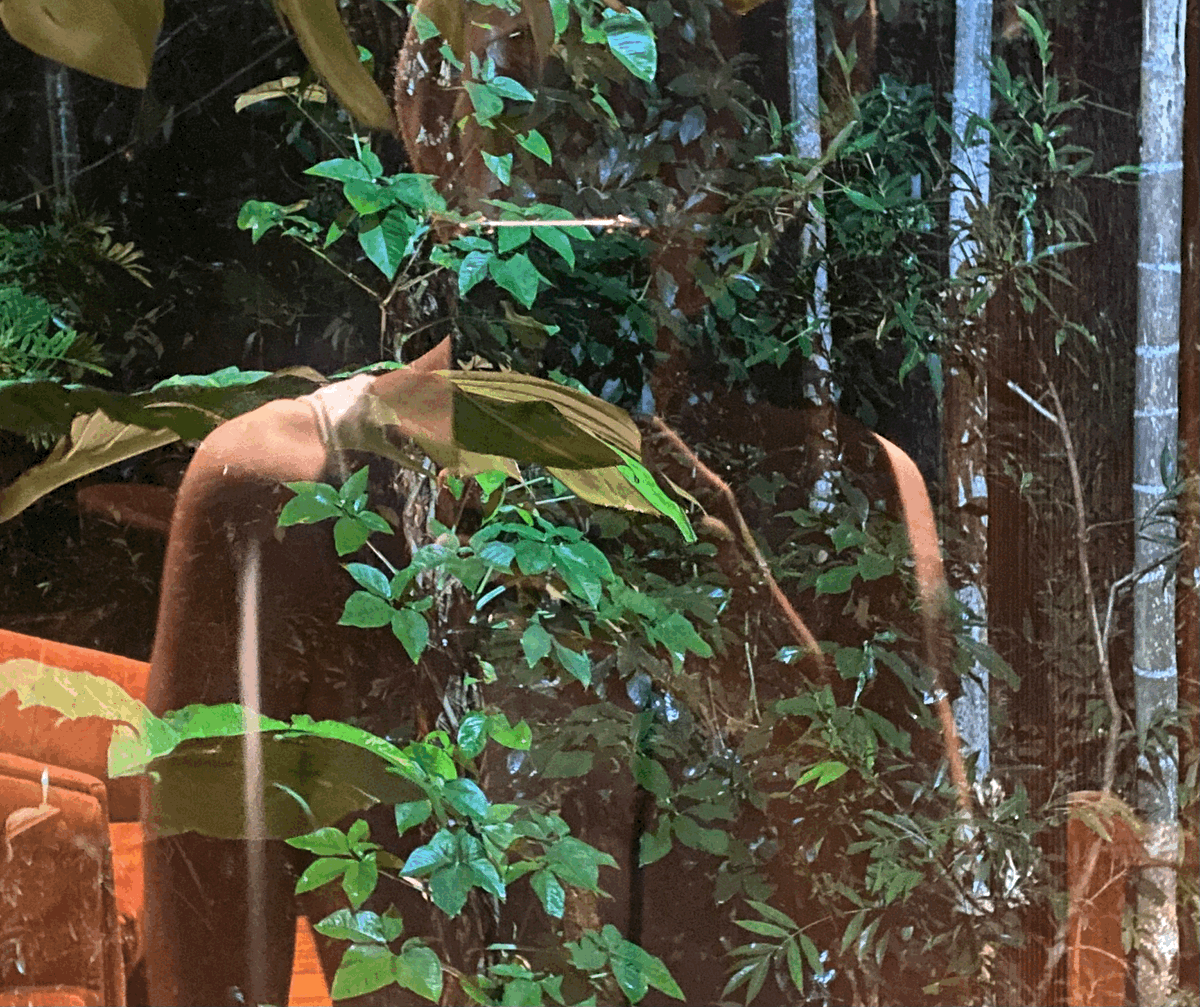
Our Sansevieria has long green-yellow leaves that tower into the air. Nested in her terracotta pot, she sits in stillness, yet her presence brings life to the room. Her leaves used to be firm and unbending, as if she knew who she was.
Slowly over time, almost unnoticed, her skin darkened, the yellow turning carob brown. One morning, I woke up to find one leaf hanging sideways, drooping under its own weight. Her rhizomes were soft and mushy when I touched them.
Looking at her now, I realise how much we had taken her company for granted. Because she once thrived, even birthing little offshoots, we assumed she had liked her new home.
We watered her with care, deciding for her what would be good. But how would we know if we never stopped to listen?
All this time, we had lived alongside her without ever really knowing her, like roommates rather than friends.
And so, instead of asking and listening, we kept watering and removing dead leaves, hoping for the best, hiding our ignorance in action.
Our Sansevieria mirrors how many of us have learned to practise care.
I see it in well-intentioned actions driven more by our own needs than by what is actually required. How often do we intervene to feel useful, or out of guilt, rather than asking what is needed?
I notice that pattern when sustainability is preached to places rather than adapted and practised with them. I notice it in moments when listening is needed, but advice is given instead. And I see it in the way stories from Iran or Venezuela are explained and interpreted, before the voices living within these places are heard.
On my next free day, I gently lifted our Sansevieria from the damp soil of her terracotta pot. Darkened, slushy rhizomes came to light, spotted with fungal earth. Her roots had surrendered to too much water.
At that point, not acting would have been neglect.
Even though it felt wrong, I cut away the rot. I laid the leaves on newspaper and let them dry, giving the wounds time to heal. Thirty-six hours later, I filled two pots with fresh soil. I carefully replanted two leaves together in one pot and placed them on my desk, closer to the window for more light. The other three found a place in the second pot on the sideboard.
For the next three weeks, I will not water our Sansevieria. I will leave her alone. She is now on her own, forming new roots in her own time. Any intervention from me would only satisfy my urge to perform care, not her needs.
All of this leaves me with one question:
How do I know when I am listening to land — and when I am projecting onto it?
IN RELATIONSHIP WITH
Is a River Alive? - Robert Macfarlane
For me, the answer has always felt obvious. I chose this book as one of seven for my 2026 reading list because I believe rivers are alive. Yet when I pause to ask myself what that really means, new questions emerge. Following Macfarlane’s encounters with rivers and those who protect them, I am finding new ways to think not only about rivers but also about how we, as humans, relate to them.
IMAGINE5
I write because I believe the stories we tell matter. Perhaps more than ever, at a time when it has become difficult to tell what is real and what is fabricated. Stories shape how we make sense of a changing world, even as we are still writing its future. In unstable times, fear and despair can leave us paralysed and overwhelmed. IMAGINE5 is a reminder of the small and the big stories: of people, actions, and impacts that already exist, showing that change is not abstract but practiced every day.
Thank you for being here today. If you feel like sharing how you listen to land, I’d love to hear from you. Sending you warmth in these strange times.
Love,
Zaza