For Life
Last time I wrote about plants. This time, about a milk foamer.
From where I am sitting, I scan the kitchen and living room, framed by Alpine wooden walls. The morning silence swirls through the room like invisible dust. A sweet taste of coffee foam softens between my lips. My thoughts wander along the furniture, none of which belongs to us.
The kitchen table, the desk, the sofa, and the television have lived here long before us, witnessing the lives of their owners and now ours.
They watched as I carved out space in the tall cupboard, placing my recently purchased second-hand books. The Lighthouse by Virginia Woolf stands next to There Are Rivers in the Sky by Elif Shafak. Wanderlust leans against The Living Mountain. To me, books feel like companions. Once they enter my home, I rarely give them away.
In the cellar, landscape prints are carefully boxed, waiting to be hung back up the moment we leave.
Unlike my books, this apartment is temporary, just like the homes before it.
I used to say I am not materialistic. Without hesitation. I don’t buy much, nor do I chase the newest trends. My phone and laptop are second-hand. Many of my clothes are hand-me-downs from my mother, whose style I like, and from friends.
Lately, however, I have been wondering what materialism actually means.
If I am free of materialism, does that also mean I am free of responsibility?
We live in a culture where objects are designed to circulate quickly. Upgrading is normal. Repairing is inconvenient. Things move through our lives without asking much of us.
In that context, I assumed that being non-materialistic was the antidote. But is owning less the same as caring more?
My mother used to tell me to take care of my things so they would last longer. As a teenager, I rolled my eyes. Now I understand she was teaching me attention.
Every morning, I foam my oat milk with my Bialetti Tuttocrema, a simple hand-pump frother I was gifted almost ten years ago. It still works perfectly.
And yet, I sometimes think about replacing it. I have tasted the electric version in other houses. The foam is thicker, creamier. The coffee tastes better.
If I bought it, it would not be out of need, but simply for convenience.
This milk foamer has moved with me across apartments, countries, and relationships. Somewhere along the way, I grew attached.
In 1999, George Monbiot argued that we are not materialistic enough. Modern consumer culture depends on our detachment from the material world. We rarely know what things are made of, where they come from, or what it takes to repair them. That detachment makes replacing them feel easy.
I have observed this in myself. When I avoid looking too closely at what things are made from, or what it took to bring them into my hands, I continue without changing anything.
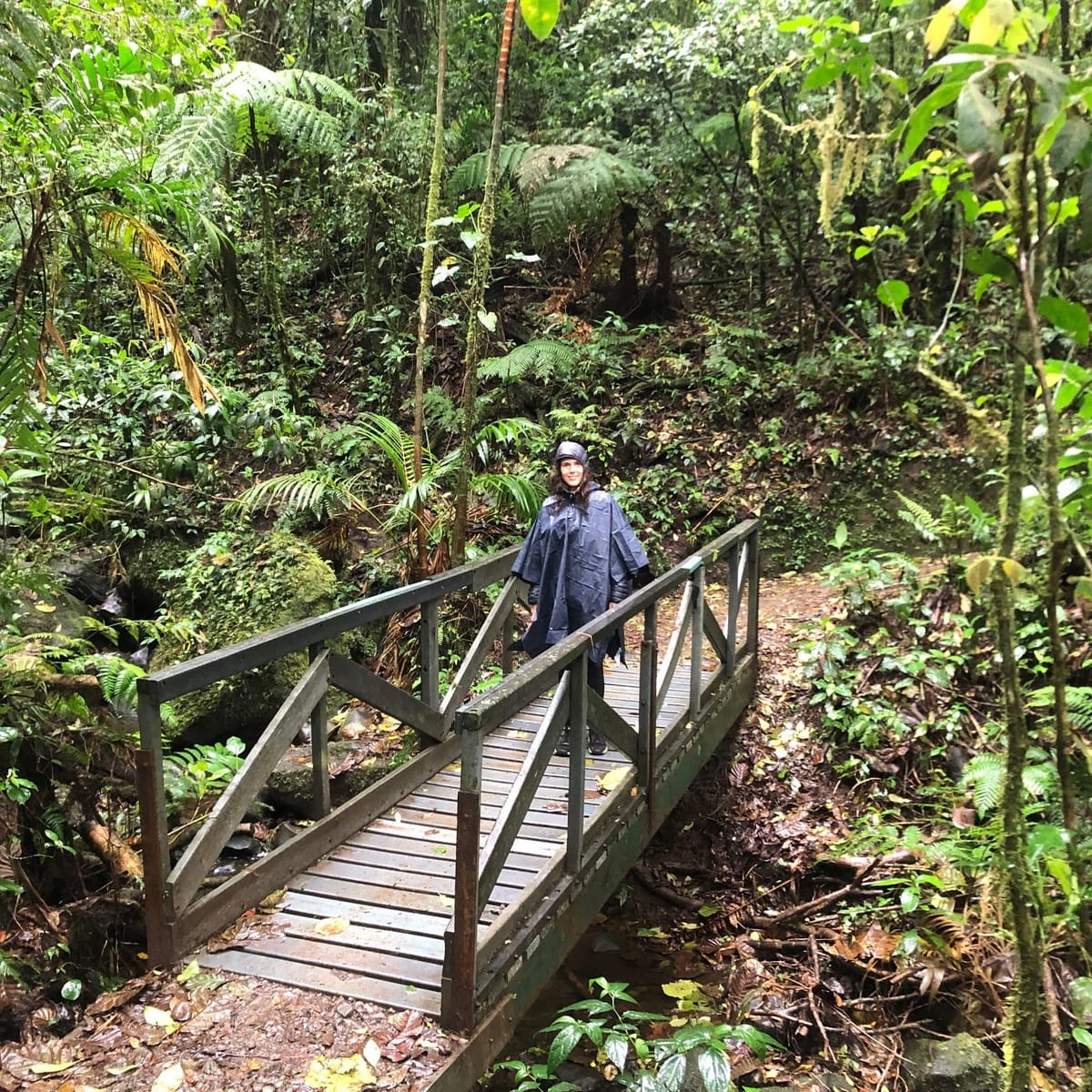
Reading Is a River Alive?, I follow Robert Macfarlane into the cloud forest of Los Cedros in Ecuador. I have walked through a cloud forest before, in Costa Rica. I stood among dense layers of green, in misty air, surrounded by its breathing biodiversity.
What I had not known as intimately were the images of mining: rivers turned the color of rust, hillsides cleared of trees, ridges cut open to expose earth and rock, and forest replaced by access roads and machinery.
The materials in my kitchen, in my laptop, in my pan come from landscapes like that, shaped by extraction.
That distance protects me.
Perhaps my non-materialism never taught me how to build a relationship with the things I own.
My eyes catch sight of our Sansevieria, still standing. I wrote recently about learning to listen to her, about relating to the environments we inhabit.
It occurs to me that the same might be true for the objects that share our days.
Recently, we bought a steel pan. When we unpacked it, my partner said, “We’re going to have this pan for life.”
For life.
Love,
Zaza